🚀 Boost Your Content Marketing Skills with Our Comprehensive Course! 🌟
Are you ready to elevate your content marketing game? Look no further! Our course is tailored to help you build credibility and rapport with your audience effectively.
📚 What's Inside?
-->> Exclusive Guide & Training: Dive into our "50 Ways to Develop Content & Video," a treasure trove of strategies and insights.
-->> Checklists Galore: Get your hands on practical checklists covering:
-->> Diverse post type templates
-->> Sources for high-quality content
-->> Innovative content idea generators
-->> Master Content Repurposing: Unlock the power of content reuse with our FREE Content Repurposing Guide. Plus, delve into our:
-->> Repurposing Deep Dive
-->> Articles & Repurposing Tactics
-->> Engaging Videos, Podcasts, & Audio strategies
-->> Effective Outlines & Presentations
-->> Eye-catching Infographics, Emails & Guides
🌟 Why Join Us?
Build Your Expertise: Learn the art of creating impactful content that resonates with your audience.
Maximize Content Lifespan: Discover how to recycle content creatively and efficiently.
🔥 Ready to transform your content marketing approach? Join us now and make every piece of content count! 💡 #ContentMarketingCourse #MarketingSkills #RepurposeContent #LearnAndGrow
Saturday, June 28, 2025
Content Marketing


Thursday, June 26, 2025
Repurpose Content Without Repetition
3 Tips to Keep Your Content Fresh:

How to Repurpose Content Without Being Repetitive
Repurposing is a bit like magic: you take a single blog post, short video, or infographic and transform it into multiple pieces of valuable content. But before you start conjuring new videos, audio, or visuals across numerous platforms, remember: there's a big difference between strategic repurposing and simply regurgitating content. If you give your audience the same thing over and over, they might disappear.
For sustained engagement, each repurposed piece must feel familiar, yet completely fresh.
1. Personalize the Content to the Medium
When people think of repurposing, many believe that its simply a matter of taking content from one medium (for example, written) and turning it into another (for example, audio, video, visual, or interactive). That's a great first step, but you can't stop there.
For example, if you start with a blog post and use it word for word in a video script, your audience is going to know somethings up. They might not recognize the exact wording, but reading a blog post out loud on video is going to sound stilted and unnatural.
You must personalize the content to the medium.
For example, lets say you're converting a tutorial blog post into a video. Instead of simply narrating the steps using the blog content as your script, incorporate a live demonstration, add some new observations, and walk viewers through the process.
2. Each Platform Has a Unique Personality
The same rule applies to platforms. If you're transforming an original piece of content into multiple social media posts on different platforms, you'll need to personalize each post. A complete rewrite or redesign is unnecessary, but keep in mind the individual platforms maximum word count, audience, and popular format.
For example, the tweet you post on X (formerly Twitter) wont look like your post on Facebook. Or, you might post a short video on TikTok and a carousel on Instagram.
3. Micro-Focus
Find a single interesting point or statistic within your original content and expand on it in different formats. It can be easier to narrow in on one sub-topic and create variations of it instead of trying to make an entire blog post appear fresh and new in different formats.
- Did a specific point generate audience interest?
- Was there an idea that you feel you could have explored further but you didn't have the space to do so?
- Is there a sub-topic that could generate fun and interesting graphics or sound clips?
- Narrow your focus to that one subject by either creating a case study, a short video showing its real-life application, or an infographic that provides more detail.
This allows you to dive deeper into subjects and offer new value without simply duplicating the entire original piece. This micro-focus gives your audience the impression that they're learning something entirely new.
3. Build on Reader Reactions
Your audiences comments and questions can inspire a wealth of repurposed content. Their unique perspectives on a topic can motivate you to reframe your content, create a response, or offer a fresh angle.
For example, if a post on productivity tips generated questions about goal-setting or removing distractions, you might create infographics, social media posts, or explainer videos that provide more information on these topics.
Or, if a commenter said something about the subject matter that you disagree with, you can create content that serves as a counter-argument (without calling out the commenter by name, of course) and demonstrates your expertise.
Getting Started with Your Repurposing Plan
Consistently producing fresh, valuable content can be overwhelming. Repurposing is a strategic approach to content development that puts a unique spin on each piece you create, helping you to improve your content strategy and increase your reach and impact.
Want to learn more about how you can repurpose your content?
Head over here:
The Content Repurposing Workshop!!
- Check out these other resources...
- Content Repurposing
- Content Repurposing FREE
- How Content Repurposing Can Save YOU!
- Is Business Blogging Part of YOUR Marketing Plan https://bit.ly/3wLHTHy
Thursday, June 19, 2025
Persistence: The Key to Sustainable Business Success
The Power of Persistent Action in Business Growth and Sustainability
Success in business rarely arrives like a lightning strike. It comes like the sunrise—gradual, consistent, and unstoppable. If you’ve ever felt stuck between where you are and where you dream your business could be, you’re not alone. But the path forward isn’t mystery or magic. It’s persistent action.
Passion ignites the spark, but it’s discipline and daily effort that keep the fire burning. Sustainable growth isn’t for the lucky—it’s for the committed. The entrepreneurs who rise above aren’t necessarily the most talented or connected. They’re the ones who show up, again and again, aligned with their purpose and willing to do the work.
Why Persistence Matters in Business
Success isn’t built overnight. It’s the result of small, consistent actions that compound over time. Here’s why persistence is crucial:
- Clarity and Focus: By continuously refining your vision and values, you align every action with your long-term business goals.
- Momentum: Regular progress fuels motivation and keeps your business moving forward, even when challenges arise.
- Adaptability: Persistent action helps you stay agile and responsive to market changes.
- Trust and Authority: Consistency in marketing and relationship-building fosters trust with your audience and positions you as an industry leader.
Key Areas of Growth and Sustainability
To build a strong, sustainable business, focus on these foundational aspects:
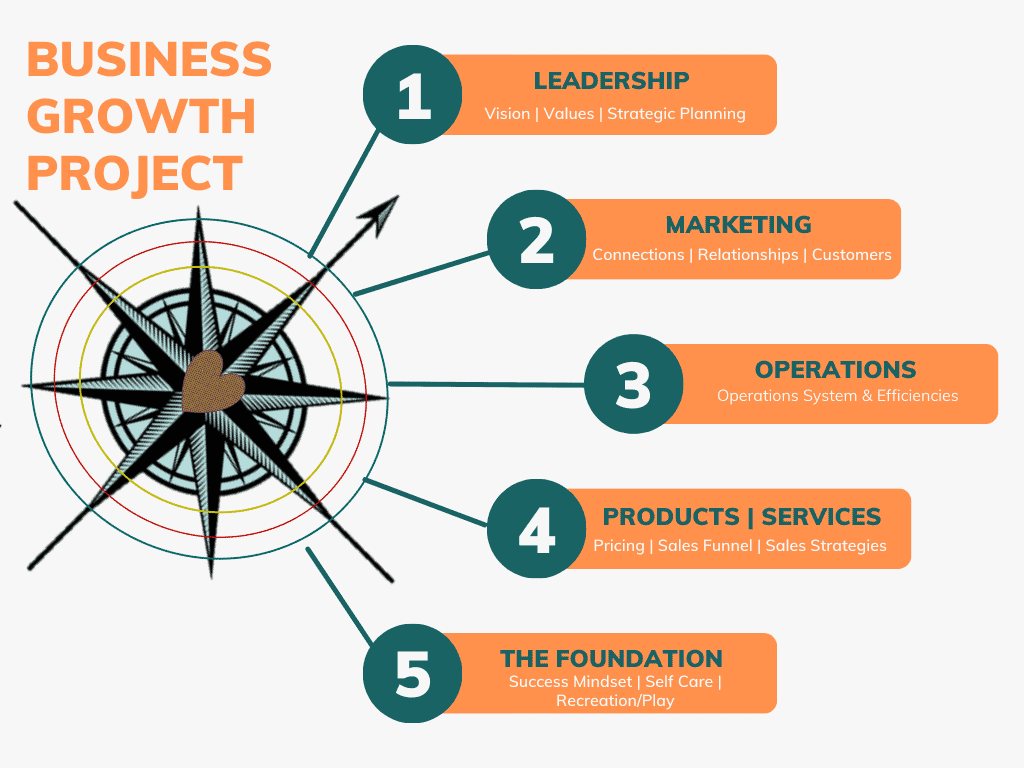
- Vision and Values - A clear vision is the foundation of any thriving business. Define your core values and purpose to create a business that aligns with your goals and mission.
- Strategic Planning - Set clear objectives and develop a roadmap to achieve them with intention and precision.
- Marketing and Relationship Building:
- Connections - Expand your network and attract your ideal audience.
- Relationships - Engage and nurture your community for long-term loyalty.
- Conversions - Implement strategies to turn prospects into paying customers.
- Operational Efficiency - Streamline systems and processes for efficiency and scalability.
- Innovation and Adaptation:
- WOW Offers - Create irresistible products and services that captivate your audience.
- Recurring Income Models - Establish subscription models for steady revenue and customer retention.
The Role of Consistency and Long-Term Commitment
Taking strategic, intentional steps toward business growth requires more than motivation; it demands discipline and the ability to stay committed to the process.
- Set Realistic Goals: Focus on incremental progress rather than overnight success.
- Develop Systems: Structure and organization create efficiency and allow for scalable growth.
- Monitor and Adjust: Regularly assess your strategies and adjust as needed to stay on track.
- Stay Educated and Connected: Engage in continuous learning and seek support from mentors, peers, or accountability groups.
The Bottom Line
Anyone can start a business. The real challenge? Building one that lasts.
Success doesn’t come from chasing trends or sprinting through short bursts of motivation. It comes from showing up with intention, every single day. From sticking with your plan, even when the path feels steep or uncertain.
If you want to build a business that not only survives but thrives—one that reflects your values, delivers real impact, and sustains you for the long haul—then choose consistency. Choose courage. Choose persistent action.
Because in the end, progress belongs to those who persist.

Get Ongoing Support Inside the Business Growth Hub
Your virtual home for learning, growing, and thriving—together.
The Business Growth Hub is our membership platform packed with 25+ on-demand business growth courses, live trainings, and coaching support. Whether you're working solo or want high-touch guidance, there's a path for you here.
✨ New! Choose the level that fits your journey:
Inner Circle – High-touch coaching for accelerated growth
Explorer – Self-guided learning for motivated doers
Navigator – Strategy + structure with community support
Limited Seats Available
Become a Member Today
https://bit.ly/3SYE0GQ
Wednesday, June 18, 2025
The Hidden Dangers of Sales and Discounts in Business
Estimated reading time: 6 minutes
Are You Helping or Hurting Your Business?

Everyone loves a good sale. As consumers, we’re drawn to discounts that feel like we’re getting the most bang for our buck. But as a business owner, is offering discounts or running frequent sales really a smart strategy for growing your brand?
The answer isn’t as straightforward as it seems. While discounts can provide benefits, they also come with potential downsides that can impact your bottom line and your brand's long-term success.
Let’s look at both sides of the discount debate, exploring when it makes sense to offer sales, when it doesn’t, and the strategies to use so that your discounts support your business instead of hurting it.
The Upsides of Offering Discounts
1. Attracting New Customers and Creating Momentum
Offering a discount or a promotional sale can be a powerful tool for bringing new customers to your business. A limited-time offer can create a sense of urgency, motivating people who might otherwise delay their purchase. Discounts can also help overcome the initial hesitation that people often feel when trying a new product or service.
A well-timed sale can energize your brand, generating excitement among current customers and creating buzz that can lead to word-of-mouth referrals. For a small business, this visibility can be invaluable, helping you reach new audiences who may later become loyal, full-price customers.
2. Encouraging Additional Purchases
In many cases, discounts don’t just bring people in—they also prompt additional spending. Customers who see that they’re “saving” may feel inclined to buy more than they would otherwise, especially if the discount requires a minimum purchase threshold. This can be a great way to increase the overall cart value, especially during holiday seasons or other high-shopping periods.
3. Clearing Out Inventory
Discounts can be especially useful when you have excess inventory or seasonal products that need to move. Offering a sale on older or soon-to-be-discontinued items helps free up storage space, and it can give your new products the attention they deserve. For businesses that rely on inventory turnover, discounts can be a strategic way to keep things fresh without having to deal with costly storage fees or unsold products.
The Downsides of Frequent Discounts
1. Eroding Profit Margins
The most obvious downside of discounts is that they cut into your profit margins. Unlike consumers, who enjoy the thrill of saving money, business owners still have to account for their expenses. The discount you offer on a product is directly taken out of your profit. For every dollar discounted, you’re losing a portion of your profit, which can add up quickly, especially if you offer frequent or deep discounts.
It’s essential to remember that your fixed costs—materials, rent, employee salaries—don’t change just because you’re offering a sale. Each time you offer a discount, it impacts your bottom line, potentially making it harder to sustain your business in the long run if your profit margins are already slim.
2. Conditioning Customers to Wait for Sales
One of the most dangerous long-term effects of offering frequent discounts is that it can “train” your customers to wait for the next sale. When discounts become predictable, your customers start to expect them, holding off on making purchases at full price. Bed, Bath & Beyond is a classic example. Over time, customers came to rely on their ever-present coupons, and it became almost unthinkable to shop there without one. The brand became known more for its discounts than for its value or product selection.
If customers associate your brand with regular sales, they may only buy from you when there’s a discount. This habit undermines your pricing structure and can make it difficult to sell products or services at their intended price point.
3. Devaluing Your Brand’s Perceived Quality
Frequent discounting can inadvertently lower the perceived value of your products or services. If your items are always on sale, customers may start to wonder if the full price was ever a fair value. When people see frequent discounts, they may begin to associate your brand with cheapness rather than quality. In industries where trust and brand reputation matter, this can be a slippery slope. Your products or services may appear less credible or reliable if people believe that the quality matches the discounted price, not the full price.
Finding the Right Balance: Tips for a Smart Discounting Strategy
Since there are both positives and negatives, a thoughtful approach to discounts and sales is essential. Here’s how to make sure your discount strategy works for you, not against you:
1. Make Discounts Purposeful and Timely
Rather than running frequent or arbitrary sales, tie discounts to special occasions, like holidays, product launches, or customer loyalty programs. If you offer discounts sparingly, they’ll feel more valuable when they do happen, and customers are less likely to rely on them as the norm.
2. Consider Alternatives to Price Discounts
Instead of directly lowering prices, think about adding value in other ways. You might bundle products together, offer a free gift with a purchase, or provide access to an exclusive resource. These alternatives can attract attention without eroding the perceived value of your products.
3. Use Discounts to Reward Loyalty, Not Entice Bargain Hunters
To avoid conditioning all customers to wait for discounts, use sales and special offers to reward your most loyal customers. Offer discounts to your email subscribers, social media followers, or previous customers as a thank you. This approach makes them feel valued while reducing the risk that new customers will expect discounts every time they shop with you.
4. Track the Impact on Your Profits
Before implementing any discount, run the numbers. Determine the break-even point, calculate your profit margins, and track sales outcomes to see if your strategy is working. A sale that generates a lot of purchases but doesn’t increase your overall profit isn’t a successful discount.
5. Communicate the Value of Your Product or Service
In all of your marketing efforts, focus on communicating the value of your products and services. Emphasize their benefits, quality, and the unique aspects of what you offer, so your customers know they’re buying something worthwhile. When customers see the full value, they’re more likely to pay full price and see discounts as a rare bonus rather than an expectation.
Final Thoughts: Use Discounts Wisely to Benefit Your Business Long-Term
Discounts can be an effective tool in your marketing strategy, but they should be used strategically and sparingly. By offering purposeful sales and avoiding constant discounts, you can attract new customers without devaluing your brand or training customers to only shop with a coupon. A strong brand that people trust and value will have far more long-term success than one that’s known primarily for its sales.
Remember, building a successful business isn’t just about making sales in the short term—it’s about creating lasting customer relationships and establishing a brand that people want to invest in at full price.
https://bit.ly/3Ax8JVJSunday, June 15, 2025
7 Effective Strategies for Finding Winning Membership Site Ideas

Unlock Your Creativity and Launch a Profitable Membership Site
Creating a membership site can be a lucrative way to provide value to your audience while generating consistent income. But before you can launch, you need a compelling idea that resonates with your target market. In this post, we'll explore seven tried-and-true strategies to help you uncover that perfect membership site idea. Let's dive in!
1. Get Personal: Brainstorm Your Own Life
Begin your journey by turning the lens inward. Reflect on your own life experiences, hobbies, and interests. Creating a membership site will be much easier and more enjoyable if it revolves around something you are passionate about.
The Rules of Brainstorming:
- Write everything down that comes to mind.
- Don't judge the ideas—just list them.
- Have fun with it!
Utilize tools like post-it notes to jot down one idea per note and place them on a wall. This makes it easier to sort and organize your thoughts later. Consider expanding your brainstorming to include your family's hobbies and interests. You may discover a niche that's not only profitable but personally meaningful.
2. Observe Product Trends
Pay close attention to the product launches happening in your niche. For instance, in the internet marketing arena, you might notice a surge in products related to video marketing, AI, or social media. These trends can provide invaluable insights.
Useful Platforms for Product Trends:
- Amazon
- Niche-specific newsletters and blogs
Following industry leaders and subscribing to their newsletters can offer a wealth of information on what’s currently selling and garnering interest. This could give you a head start on your own membership site.
3. Peruse Industry-Specific Platforms
To peruse means to examine something minutely, and platforms like JVZoo, Amazon, and ClickBank can be gold mines for this kind of research.
Actions to Take:
- Visit these platforms to see what’s hot in your niche.
- Note down emerging trends and popular products.
- Add these ideas to your brainstorming list.
This will also help you identify affiliate products that could complement your membership site, providing additional revenue streams.
4. Monitor Popularity Indicators
Amazon’s bestseller lists are categorized, making it easier for you to focus on topics relevant to your interests. Use this to pinpoint popular topics within your niche.
Steps for Researching Popularity:
- Check Amazon’s bestseller lists.
- Focus on categories related to your niche.
- Incorporate popular topics into your membership site planning.
This indicator is invaluable because it relies on actual sales data, giving you a clearer picture of what your potential audience is already interested in.
5. Check the Pulse in Forums and Groups
Communities and forums can reveal what your target market is talking about, questioning, or purchasing.
How to Find Forums and Groups:
- Do a basic search with your keyword and the word “forum.”
- Explore platforms like Slack, Discord, Reddit, and Facebook.
Look into FAQ sections and trending topics within these groups. This can provide direct insight into your audience’s needs and wants, helping you tailor your membership site accordingly.
6. Dive into Periodicals
Periodicals might seem old-school, but they are repositories of specialized knowledge and trends. Websites like writemagazines.com offer lists of various periodicals.
Why Periodicals Matter:
- They exist only because there's an audience willing to pay for them.
- Advertisers spend big money to get in front of these audiences.
Identifying a periodical dedicated to your market can suggest a high demand, validating your idea for a membership site.
7. Solve Real Problems
Google Groups and other email discussion lists are a treasure trove of user-generated content. These discussions often revolve around unsolved problems and unmet needs.
Steps to Utilize Discussion Lists:
- Sign up for relevant Google Groups.
- Set up a dedicated email for these discussions.
- Observe the questions and issues being raised.
By focusing on the problems that haven’t been solved by existing services or products, you can carve out a unique niche for your membership site.
Final Thoughts
Embarking on the journey of launching a membership site can seem daunting, but with these seven strategies, you’ll be well-equipped to find a winning idea. Brainstorm personally relevant ideas, observe product trends, peruse popular platforms, and constantly check the pulse of your community. Dive into periodicals for specialized insights and solve real-world problems to create an irresistible membership site.
Take action today and turn your passion into a profitable venture! If you need that extra push, don’t hesitate to schedule a consultation to put you on the fast track to success.
Make it a great day and take big action in your business!
https://bit.ly/43967sXSaturday, June 14, 2025
Building Your Marketing System
Why do you want and need a marketing system?
When you build a marketing system that is YOURS, you KNOW that you have a way to increase your revenue easily and predictably.
A marketing system consistently:
- Brings new and qualified leads (future buyers) into your business
- Has a system for follow up and nurturing that helps YOU connect with your new leads and build the "know, like, trust" relationship
- Uses calls to action wisely to bring people into your customer base.
- Provides customer service that builds loyalty and repeat business.
- Works easily and reliably so that you know what to expect for your growth each week or month.
- Is trackable so that you can improve it when it is not working as well as you want or need it to.
So what does this really mean? Isn't all marketing the same?
There are definitely marketing concepts that work across businesses and industries that you should be implementing in your business. But they can look different for different companies.
For instance, if you are a local boutique you need local traffic into your store. Can the Internet or social media help with that? Definitely. But you also need signage on your storefront, local ads with calls to action.
The biggest mistake I see is that people focus on getting buyers and that doesn't work in a lot of industries. And the mistake is that they don't get the person's information or capture the lead! They have no way to follow up or continuing to build the relationship. The interaction is over.
This happens over and over. A business owner runs an ad -- sending the lead to their BUY NOW button and they don't buy, they bounce! But what if was a different call to action -- an optin where the first step was a really valuable item at a low cost or no cost. Then you have the opportunity to continue marketing and building the "know, like, trust."
So, whether you are a local shop or an online business -- lead capture is key. It has to be a part of your marketing system!!
Lead capture or optins are different from followers or connections. When you build your email list -- it is YOURS. When you have followers or connections or friends on a social media platform, they can definitely become buyers but they can also be taken away by the platform without your control. Moving people over to your email list is key.
What are the pieces of the marketing system?
- Being clear on your target market -- who are you marketing to?
- Lead capture -- having a way of capturing the information when someone connects with you.
- Follow-up - they say the money is in the follow-up and so many miss this opportunity to continue connecting.
- Presenting valuable offers -- when you have done a good job of connecting with your target market, your service should be valuable to them. Building good offers that provide a ton of value are the offers that people will be interested in.
- Loyalty -- everything you are doing up to this step is geared to help you in building loyalty. If you don't have a good follow up system, you will lose customers and they won't come back, because you are not telling them what you have to offer to them.
When you build YOUR system, you have the ability to predict your results. You can turn it on and off. Or up and down based on what you can handle.
When you have a working sales and marketing system -- you can look at HOW to scale your business!! That's exciting! Not everyone is doing that, because not everyone is building a system for their sales and marketing. If there is only one system that you are going to build in your business -- this is the one!!
https://bit.ly/3LrNhDWThursday, June 12, 2025
4 Things You Can Do To Your Workspace to Encourage Self Care
Make Your Workspace -- Welcome YOU!!

What does your workspace say about you? Most people try to find ways to personalize the space where they work. While not every job allows for much in the way of personal touches, there are some things you can do to keep your workspace uniquely you. This lends itself to better productivity.
But how does your workspace impact your health? Think about this: there are many things you can do to workspace to encourage self-care. Imagine how this could change your life.
Try these things:
Build Better Boundaries
There are times when you can deal with an interruption, and times when you just need to work. Look for ways to create better boundaries to keep your productivity high, and your frustration low. If you have the ability to shut your door when you need to concentrate, do so. if not, talk to your coworkers about how to signal them when you are in interruption-free mode.
Clean Up Your Act
Sometimes the simplest thing self-care action at work is to create a better workspace for yourself is to clean up the clutter. By being able to find what you need, when you need it, you preserve your sanity and get more done.
Escape to Eat
Your workspace should never be a dining hall. When your lunch break comes around, it's time for you to go. The problem with eating at your desk, is you become tempted to keep working while you eat. The best self-care practice at lunchtime is to step out and eat elsewhere. Even if you work from home, the very act of eating away from your workspace can do wonders for your mental health. Go to another room or even just pick a different chair at the kitchen table as a way of telling your brain you're done working for the time being.
Put Away the Screens
While it's not always practical to put away your laptop or tablet, it's good to do so when you can. Why? After a few hours, staring at any screen, whether it's on your phone or elsewhere, can make your eyes hurt. This constant exposure to electronics can be very wearying and even cause damage to your body over time. Don't believe it? Consider how many people you know, yourself included, who have had problems with carpel tunnel in the past year or two. The solution? Make a point of doing some things by hand. To do lists don't need to be on an app or computer screen to be effective. Also, clustering jobs which aren't tech heavy can give you a nice break during the day.
The key to self-care at work is in making your workspace work for you, not against you. By paying attention to these simple details, you'll feel more productive and enjoy your work day more.
https://www.youtube.com/watch?v=RoMLDQWFlLw
- Learn To Set Boundaries And Start Saying No
- Practicing Self Care: 5 Unique Ways
- The Self Care System
- Self Care Tips
- 6 Tips for Practicing Self Care Even When Times are Tough https://bit.ly/3i8Vq0n
Friday, June 06, 2025
The Essence Of Adopting a Morning Ritual Habit
Creating a Morning Ritual Can Change Your Life!!
If you hate waking up early, then you need to read this article (I can definitely fall into this category at times). According to research, creating good habits and sticking to a morning routine plays a huge role in your success. If you're a night owl, unfortunately, this means you will have to find ways to adapt and change your lifestyle.
Creating a morning routine and turning it into a habit may sound difficult at first. But if you keep at it every day for at least a month, you will start seeing noticeable differences in how you approach your entire day. A morning routine will help you feel more stable and you'll be so much more in control of your day.
Its peaceful in the morning
Early mornings don't have as much distraction as other times of the day. Your family and your neighbors will still be in bed (unless they've also adopted this habit), there'll be less noise on the streets, and your personal space will seem so much bigger.
With less distraction, you'll be able to think clearly and you'll have time to exercise, meditate, pray, update your journal, and plan your entire day.
A morning routine will help you feel more in control of your life and you wont feel as disorganized as before simply because you will have time to think your day through and organize your activities.
Simply put, your morning routine will set the tone for your day.
Get work done early
Mornings are best for getting your most difficult tasks done. Getting these tasks out of the way lets you enjoy relatively stress-free afternoons and you'll be much happier because you can get more things done in the day.
Your productivity levels will increase and you can even start working in advance on tasks that don't need to be done until later.
When you get things done earlier and faster in the day, you can reward yourself for a job well done. Just be careful when rewarding yourself though as some rewards may actually be detrimental to your goals.
For instance, if someone asks you to go partying on a weekday, you may want to tell them no. You may be tempted but think first if its going to somehow cause you to sleep in late and thus wake up late the following day. If this is the case, then simply decline.
No amount of partying can replace what you can accomplish by sticking to, and religiously following, your morning routine habit!
- 3 Simple Morning Routines
- 10 Self Worth Affirmations that Work
- 5 Habits that Stop You From Finishing What You Start
- Do YOU Know the Marketing Keys?
- 3 Ways to Get Corporate Sponsors
Wednesday, June 04, 2025
Learn How to Track Your Numbers

in your list building campaign learning how to track your Numbers.... Key
Focusing on a successful list building campaign, you need to track your marketing strategy multiple times to glean more information.
You will be unable to boost your conversion until you track your campaigns. To test and track your campaign, you need understand the idea. You need to track your programs and tactics, messages, contact frequency and spending levels to optimize your marketing strategy. Otherwise you are doing HOPE MARKETING and hoping it will work! Numbers tell you if it is or it is not.
Testing and tracking can increase your ROI.
By tracking your campaigns, you will be able to know which campaign bring more traffic toward your website. You can also know from where your visitors are coming to your website such as advertisement, Search engine optimization, social media, blogs etc. By adding tracking code on every page of your website, you can get to know the page visits of visitors that don't converted into your subscribers.
Mainly you need to track for optimizing your campaign, your results.
Number of MQLs (marketing qualified leads): Remember the quotes the money is in the list, you need to add quality leads in your list and eliminate bad leads from it.
Cost per MQL (marketing qualified leads): if you using list building for your marketing campaign. Be sure you are maximizing your leads and minimizing the cost per qualified leads. If you have a list of unqualified leads or not good leads, the size of that list is irrelevant. You can have a HUGE list that costs you money and does not make you a dime. It is worthless.
Cost per Sales or Accepted Opportunity: Examine all of the money spent and the resulting sales or accepted opportunity very carefully over a defined time period. You can have opt-ins for your free offer that later convert to your paid offer. You need this information to determine if the investment in the sales campaign for the free offer converts enough people to the paid offer.
First-Touch ROI (by program): The basic job of a list building marketer is to decide which particular campaign to be used. Your main objective should be to get the highest ROI for your business.
Multi-Touch ROI (by program): Some programs look to be result oriented as compared to the other available. They might not give the desired output in the first impression. Be very careful in deciding which particular campaigns you need to follow. However it does not mean they will not give results in the long run. So, don't stop using them immediately.
You need to find-out which marketing tools works best for your list building campaign. Google AdWords? Webinars? Trade shows? Facebook Ads? LinkedIn Ads? Instagram Ads? Facebook LIVES .....To find out you need to track each campaign.
Campaign Source: You need to recognize and track your lead sources so you can optimize your ROI through your sales funnel. This means you need to understand where the lead is coming from and track the campaigns so that you can make this determination. Yes, everyone might end up on the same list. But YOU need to know if the Facebook Ads campaign has a different conversion rate from the Google Ads....and look at your spend for each campaign in comparison to your results.
Campaign Name: It enables you to distinguish among various campaigns to test different advertisements.
Campaign Medium: It defines the web pages or ads from where the visitors are redirected to your website such as pay-per-click, banner ad or email, search engine etc.
Tracking list history and sales funnel can optimize your business revenue. You can also test report and dashboards by having a clear idea of your funnel and stages according to leads, closed deals and revenue. You can segment your list on the basis of demographics, interest, and product to measure your success.
You can keep rectify your tactics time to time to get better results. You should measure your user responds such as automatic updates, individual manual updates and mass updates. Keep tracking of your opt-in rate, unique open rate, click thorough rate, email deliver success rate, subscribers, unsubscribes and lead conversions to evaluate your list building campaign.
https://bit.ly/3pK7qao