Monday, March 16, 2026

Leadership Growth - A Number 1 Success Strategy

Leadership Growth - A Number 1 Success Strategy

Estimated reading time: 5 minutes


Table of contents

- Leadership Growth -- Navigating To Success:- Embrace a Process for Success
- Vision
- Evaluate
- Strategic Planning
- Implementation
- Accountability
- ReAssess
- Leadership
leadership growth

Leadership Growth -- Navigating To Success:


Embrace a Process for Success


Building a successful and thriving business is a journey, one that requires navigation, a compass and a plan.  Navigating a business to success takes every aspect outlined. Whether you are working with a strategic coach or a business success coach, the process remains.  You MUST start at the beginning with a Vision.


Vision


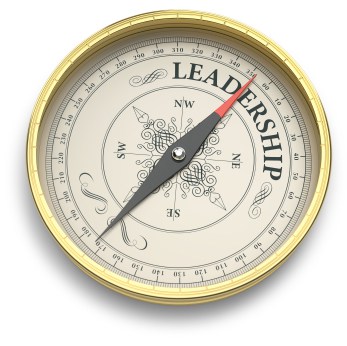
Vision guides you as the leader and guides your staff and team.  It is your destination.  What you are striving for and it incorporates your core purpose, your mission and ultimately, becomes your navigator or compass.  Without a clear and compelling vision your business can go I many unrelated directions.  You ultimately get off your right path.  The vision as compass helps you to stay moving your company in the right direction.


Evaluate


Once you have created and revised your vision, before getting started take time to evaluate where you are.  In developing a performance culture and a successful business it is important to evaluate where you are right now.  What have you accomplished?  Where have you failed?  What are the lessons that you have learned and that you can learn from both?  These lessons can then become tools in your tool box as you build your strategies for the upcoming year.  Many businesses fail to operate in a system of evaluation and learning.  They keep doing but they never learn the lessons of their successes and misses.


Strategic Planning


Build your map.  Your strategic plan is your map to the vision. Without a good map it is challenging to get where you want to go. Strategies can help to keep you focused, aligned and on target.  It is vital to not overdo strategic planning.  Keep it simple: strategies that you can keep in front of you and keep in action.  The vision (compass) remains the destination. The strategic plan is how you get there.


Implementation


This is where companies fail.  They create the vision, they have the strategies and then they fail to implement or they only partially implement. Implementation gets you to the vision.  Without implementation you cannot accomplish the success the company is striving for.  With a usable, functional strategic plan, implementation is easier.


Accountability


Building in accountability to your system of strategic planning and implementation keeps your organization moving forward and on track.  Set up a system of accountability. Score goals, report back on implementation.  Have consistent meetings and accountability reports to keep each person on track and moving forward with goals and strategies.  Hold each individual accountable to what they are responsible for.  It is not a time for wavering on accountability.  The vision depends upon each part of this process.


ReAssess


Regularly you need to evaluate and reassess where you are.  What strategies are working?  What is not working and why?  What went well?  What didn't go well?  What needs to improve?  All of these questions are vital to keep the organization growing and improving and ultimately succeeding.  The organization needs to use a cycle of evaluation, strategic planning, implementation (action plans), accountability (monthly meetings) and back to reassess and evaluate.  It is a cycle of learning, a cycle of productivity and a cycle of producing results.


Leadership


Leadership is at the core of Navigating to Success.  As the leader, you are the visionary.  You drive the company.  Sharing your vision and your passion is essential.  It is part of leading.  Bringing your staff into the fold, to KNOW the vision, collaborate on the strategies and implement builds success strategies and buy-in from your team.  As the leader, you depend upon staff to bring your vision to life.  It becomes essential that you lead.  Be strategic as the leader -- develop a strategic process of navigating to success.


The process of leadership is a cycle of continuous, lifelong learning much like this process.  Leaders that choose to take on the challenge of leadership and their own personal growth and development as a leader are able to achieve more.  It is a process, and an intentional one. It requires the commitment of the leader.


Most every leader is challenged in some way.  Leadership is a people sport:  people dynamics and when you involve people then there are challenges.

Staff will always throw unexpected curve-balls for leaders to work through.  Periodic assessment of skills is a great strategy for determining whether the leadership development plan has been effective in addressing the areas that needed attention.  Assessment begins the cycle again.  With a continuous plan for improving leadership and improving the workplace companies can achieve more than they set out to.


It begins with awareness or assessment:  knowing where you are currently at. Awareness is a gift, knowing that you are not perfect, that there is room for growth and that you don’t know all of the answers for interacting with your team.  Completing a leadership assessment can be a tool for digging a bit deeper into your current skills.  Leadership assessments can be individual or with input from constituents, such as a 360 instrument.  The goal is to see where there are strengths and where there is room for growth and focused skill development.  Every leader possesses some skills and every (honest) leader has areas that can improve and areas for learning and growth.



Leadership growth is not just the responsibility of the company but also that of the leader.  Leaders, themselves, have to recognize the need and the benefit to their leadership development.  Leaders can create their own leadership development plan and review it each year.  By implementing an intentional and focused leadership development plan, leaders improve the results they achieve for the businesses, their staff and teams.  Investing in leadership development just makes sense.


Leadership Growth is a lifelong process: an endeavor that takes courage and commitment, an awareness of oneself and the need to foster one’s own skills.


- Leadership Development: A Process
- What Happens When You Put Off Leadership Development?
- Making Things Happen
- Strategic Plan - The Map to Results
- Strategic Planning https://bit.ly/45nSiHO

Thursday, March 12, 2026

Team Building -- Part of Leadership

Team Building: An Essential Leadership Skill


team building

Corporations can not survive without teams: there's too much work to do. As a company grows it divides into teams, based on common factors. Instead of having one or several people do everything the individual employees become specialists in one aspect of the business. Companies believe this saves money and is the best way to utilize the abilities of their employees.


Dividing personnel and putting them in a certain spot on the organizational chart does not produce unity. It takes time and work to build an efficient and effective team. Unfortunately, many teams become dysfunctional. A dysfunctional team can slow productivity, service delivery and the overall operational effectiveness of the company.


Teams do not have to be dysfunctional.


The leader or manager, more than anything else, determines the success or failure of a team. If the leader’s agenda and delivery is all about the leader rather than the individual team members or the team, it feels like a dictatorship.  This type of leader often does not want input.  Employees are not confident sharing their true opinions or ideas in this type environment. Rather their responses become routine intending to please the leader. When the leader fails to do effective team building, employees do not grow, good ideas are repressed and this attitude affects all areas of their jobs and the company.


A leader not willing to listen could have their own confidence challenges as well as control problems.

Many times the most qualified person for the job does not have the management and leadership skills that they need to transition to their role as leader. Leadership skills can be learned and developed.  This can be accomplished through training with ongoing coaching. Unfortunately, employees are stuck with the unqualified manager while they either become more qualified as a leader or continue to operate as they have - a tough situation to be in and the company suffers.


Managing conflict in the workplace can highlight the challenges a leader can face. People fear conflict for numerous reasons. Some avoid it at all costs. This type of person is careful to make sure none of their words are interpreted as controversial.  Others abandon the discussion as it starts to pick up steam. A good leader knows how to navigate conflict. Discussing different ideas and ways of doing things often leads to a better way. A good leader is comfortable facilitating diverse opinions, does not let anyone get out of order, draws out quiet employees, does not allow one person to monopolize the situation and considers all suggestions.


Leaders are expected to evaluate the performance of team members, hold them accountable, apply discipline if needed, and foster a positive team environment. A leader, who lacks self control and does not want others to hold them accountable, finds it difficult to manage people. Team members have jobs to do, goals to reach, and expectations to meet. They grow when their manager communicates with them openly and honestly about their responsibilities. In many companies though it seems leadership styles range from one extreme to the other – they either overlook everyone's behavior or they control everything everyone does.


What can a leader do to foster healthy growth on their team? Being human and showing their vulnerability is perhaps the most important tools for good leaders. It demonstrates their authenticity, and builds trust. Many times employees feel inferior to their leaders. Therefore, they are never truly comfortable around their managers and are reluctant to speak up. A good leader admits when they are wrong as well as shares incidents to show they are imperfect humans. They make everyone feel as important as everyone else. It is difficult to build teams if employees feel favoritism exists.


Good Leaders Aren't Scared of Team Building


A good leader encourages communication and feedback from their employees. When someone shares an idea they do not belittle that person, and they do not let other team members attack each other. By giving each person and each idea value, the employees feel valued. When suggestions lead to positive changes, a good leader gives credit to the person with the idea as well as the team. This builds self confidence and a strong team. Employees continue contributing. In some situations a healthy team is more productive than individuals. The team combines the strength and knowledge of all members.


A good leader keeps the team focused. In the work place, especially during meetings, it is easy to get distracted. The employees look to the manager as their example.  If the manager has a negative attitude or spends too much time on personal phone calls, the employees feel this is OK.


A good leader controls the work environment without being controlling. It's a common belief that actors have strong egos. Leaders lose their egos. They do not focus on their needs but rather what's best for the team. A good leader knows without the help of their team they will not be successful. Therefore, one of their main advantages is to build a strong team.


Need Team Building in your organization?  Or training for your leaders on how to build high performing teams?
Schedule a Cup of Tea -- Let's talk it over!!

Tea is always a good way to talk about what's going on and what might be a good strategy for change. It's a place to start... and it's tea!


Click here
- Strategic Planning For Results
- Using Adventure Team Building For IMPROVING Results
- Donna Price Books
- Strategic Planning
- Strategic Plan - The Map to Results https://bit.ly/4o91Eyt

Tuesday, March 10, 2026

Content Marketing

Content Marketing
🚀 Boost Your Content Marketing Skills with Our Comprehensive Course! 🌟

Are you ready to elevate your content marketing game? Look no further! Our course is tailored to help you build credibility and rapport with your audience effectively.

📚 What's Inside?

-->> Exclusive Guide & Training: Dive into our "50 Ways to Develop Content & Video," a treasure trove of strategies and insights.
-->> Checklists Galore: Get your hands on practical checklists covering:
-->> Diverse post type templates
-->> Sources for high-quality content
-->> Innovative content idea generators
-->> Master Content Repurposing: Unlock the power of content reuse with our FREE Content Repurposing Guide. Plus, delve into our:
-->> Repurposing Deep Dive
-->> Articles & Repurposing Tactics
-->> Engaging Videos, Podcasts, & Audio strategies
-->> Effective Outlines & Presentations
-->> Eye-catching Infographics, Emails & Guides

🌟 Why Join Us?

Build Your Expertise: Learn the art of creating impactful content that resonates with your audience.
Maximize Content Lifespan: Discover how to recycle content creatively and efficiently.

🔥 Ready to transform your content marketing approach? Join us now and make every piece of content count! 💡 #ContentMarketingCourse #MarketingSkills #RepurposeContent #LearnAndGrow

https://bit.ly/3RHGxoV

Sunday, March 01, 2026

4 Reasons for Goal Setting


4 Reasons for Goal Setting

The Importance of Goal Setting


Goal setting is an important aspect in both your professional and personal lives. Without having goals, you are unable to measure your success or achievements. You cannot improve yourself. Setting goals is also beneficial for your health and wellbeing but what exactly are the benefits of setting goals?


goal settingbr

1. Control


By regularly setting goals and achieving them you are taking control of your life. This is important because you are acknowledging that life doesn't 'just happen'. There is actually a great deal that you can do to create the life you want and get it moving in the direction you desire.


2. Optimism


Along with the feeling of control when you make goals and plans and then start to achieve them, you will gain a more positive and optimistic outlook. This positivity will prove very powerful as it will help you build resilience. This will help you keep going when things might seem tough or you encounter a block.


Instead of feeling defeat or that you can't go on, your new found resilience and optimism will ensure that you see that the situation is temporary and that you have the power to find a way to overcome it.


3. Wellbeing


Through goal setting you will have created a plan for your life. In your mind you've created a vision of what you want and worked out a way to get there. This sense of purpose gives you a feeling of hope that you can achieve what you want.


These are all positive emotions and have powerful effects on your mental and physical wellbeing. Stress levels will be reduced, as will the likelihood of depression emerging. While you are working towards achieving your goals, you will increase your levels of focus and your ability to use it at will to help you get the results you want.


4. Flow State


The regular setting of meaningful goals ensures that you maximize opportunities to utilize the power of flow. The flow state occurs when:


- you have a meaningful goal
- position yourself away from distractions
- have all the necessary resources at hand
- have matched the task to your abilities so that it contains enough challenge to keep you motivated and engaged but
- not too little so that you become bored and
- immerse yourself in the task completely.

This state not only helps you achieve goals but it increases your productivity, relieves stress and increases happiness. The benefits of the flow state have been recorded by Mihly Cskszentmihlyi, a positive psychologist.


By having goals, you are increasing your chances of success. You are also taking positive steps to creating the life or business that you want.


While it may seem like a lot of effort it really isn't and the benefits outweigh any time spent creating, monitoring and meeting them. This is because you will find yourself feeling more productive, optimistic, proactive and successful.

https://bit.ly/3JJvdow