Thursday, July 03, 2025

Science Proves Gratitude Fuels Happiness and Success 🌟

Estimated reading time: 3 minutes


Table of contents

- Gratitude: The Secret Ingredient to Happiness, Success, and Impact 🌟
- 🌼 Gratitude as a Happiness Booster- The magic of gratitude is twofold:
- 💡 The Science Behind Gratitude
- 🌟 Gratitude in Action: Your Roadmap to Success
- ✨ Start Your Gratitude Journey Today

Gratitude: The Secret Ingredient to Happiness, Success, and Impact 🌟


Gratitude is more than a polite "thank you." It’s a transformative emotion with the power to improve happiness, strengthen relationships, and even boost your health. At Compass Rose Consulting, we believe that gratitude is foundational—not just for personal well-being, but also for building visionary businesses that thrive. Let’s explore how cultivating gratitude can make an impact on you, your business, and the world.


🌼 Gratitude as a Happiness Booster


For many, gratitude is simply a response to kindness. But in psychology, gratitude is a profound recognition of the goodness in our lives, and it affirms the graciousness of those around us. When we focus on the blessings—big or small—we naturally become more content, generous, and cheerful.


The magic of gratitude is twofold:
- The Giver’s Joy: Giving thanks uplifts your spirit and strengthens your connections.
- The Receiver’s Delight: Feeling appreciated fosters deeper bonds and spreads happiness.

💡 The Science Behind Gratitude


In our fast-paced world, we often overlook everyday blessings. But research shows that gratitude changes everything:


Improved Health:
Optimism, fueled by gratitude, has been shown to strengthen immunity. According to a Harvard Medical School study, optimists live longer, healthier lives.


Deeper Relationships:
Gratitude fosters connection. A 2014 study revealed that showing appreciation—even for small acts of kindness—builds trust and opens doors to new friendships.


Less Stress, More Joy:
Feeling grateful helps reduce depression and boost happiness. A simple act of thoughtful appreciation can increase happiness by 10% and reduce depression by 35%.


Thriving Businesses:
At Compass Rose Consulting, we emphasize that gratitude is essential for successful leadership and teamwork. Expressing gratitude to employees, clients, and collaborators creates a positive ripple effect. People who feel valued are more likely to go the extra mile, driving both happiness and business growth.


🌟 Gratitude in Action: Your Roadmap to Success


Incorporating gratitude into your life and business isn’t complicated. Here are a few ways to start:


- Daily Reflection: Begin or end each day by jotting down three things you’re grateful for.
- Authentic Appreciation: Send a heartfelt thank-you email, note, or message to someone who’s made a difference.
- Gratitude in Business: Make appreciation part of your company culture. Acknowledge team contributions and thank clients or partners for their trust.
- Mindful Living: Take time to recognize the little things—kind words, sunny days, or even a good cup of coffee.

At Compass Rose Consulting, gratitude is more than a mindset—it’s part of our framework for creating impactful, world-changing businesses. By cultivating an attitude of gratitude, you not only increase personal happiness but also elevate your team, your clients, and your community.


✨ Start Your Gratitude Journey Today


Gratitude isn’t just good for you; it’s a game-changer for your business and your legacy. As you cultivate this practice, you’ll find that success and happiness go hand in hand.


What are you grateful for today? Share your thoughts below, or connect with us to explore how gratitude can be a cornerstone of your personal and professional growth.


At Compass Rose Consulting, we help womenpreneurs grow visionary businesses that make a difference. Together, let’s create a brighter future—one act of gratitude at a time. 🌿

https://bit.ly/49eZjv0

Repurposing Formats to Increase Your Audience

repurposing formats

Table of contents

- Repurposing Formats can be the answer to: The Top Reason People Ignore Your Content!!
- Repurposing Formats can Accommodate Various Learning Styles
- Analyze Your Content When Considering Repurposing Formats
- Repurpose Your Content!!
- Monitor Results

Repurposing Formats can be the answer to: The Top Reason People Ignore Your Content!!


Do you find yourself spending hours researching and creating content and when it finally goes live nothing?

You have created engaging material about topics your audience cares about, but the likes, shares, or comments are underwhelming.


The problem is not always the quality of the material itself, but it could be the format.


Do you understand WHERE your audience consumes their info?


Repurposing Formats can Accommodate Various Learning Styles


People have different learning styles and preferred ways of consuming content. So, you need to look at how to accommodate that!!

Written: Written content including articles, eBooks, and blog posts appeals to people who prefer reading and have strong comprehension skills. Written content gives people the freedom to take in information at their own pace and easily refer back to sections they want to review.


Visual: Visual content like charts, diagrams, infographics, and videos appeal to learners who process information visually. For them, pictures and graphics make complex information more digestible, accessible, and memorable.


Audio: Audio content includes audiobooks, lectures, and podcasts, and it suits learners who take in information by listening. Its also useful for people who like to multi-task, tuning in while exercising or commuting.


Analyze Your Content When Considering Repurposing Formats


Quickly review the last 10-15 pieces of content you have created. What percentage of your content is written, visual, video, or audio?

Lets say the majority of your marketing content is written, for example, blog posts, social posts, reports, eBooks etc. Various studies have shown that up to 65% of the general population are visual learners. If you do not accommodate this segment of your audience, you could end up losing them.


The solution?

Repurpose Your Content!!


Repurposing allows you to connect with more people, using content they enjoy consuming, across various platforms.


Repurposing is not simply about recycling content. Its about strategically transforming your content to cater to your audience and the different ways they consume content and learn. For example, you could transform a long-form blog post into an infographic, explainer video, or podcast episode, reaching your visual or auditory learners.


You can also repurpose to incorporate all mediums and learning styles, making sure each type is represented: written (a social post), visual (an infographic), and auditory (a podcast episode). Or, when you repurpose, combine 2 or more mediums in one piece, for example, add an infographic and audio snippet to a blog post.


Monitor Results


After you repurpose, monitor your engagement metrics: Which formats are getting more likes, shares, and comments? Are certain types of content driving more traffic to your website? Asking these questions will allow you to know your audience better and adjust your repurposing strategy as needed.


Learn more with my Content Repurposing Guide:


Want to connect with a broader audience through repurposing? Check out my course, Repurposing which teaches you the A to Z.

This guide will give you Quick Tips for creating a content marketing strategy.

Using your content only once is cumbersome. It means that you are constantly creating new content. But when you repurpose your content, then you are able to maximize its reach and its power.


Check it Out

Content Repurposing is central to an effective Content Marketing Strategy.


Can content be a marketing strategy? YES!! Definitely! Content educates your prospect, your leads about YOU, your organization and what you have to offer. It is a pre-seller to your services.


Content Repurposing Workshop


https://bit.ly/4di0B9e

Tuesday, July 01, 2025

Top 5 Tips to Add Value to Your Repurposed Content

Repurposing Saves You Time and Money.


Don't let it be overwhelming!!

repurpose content

You’ve heard it said numerous times: repurposing content isn’t simply a matter of recycling – you’re not just taking the original content and pasting it into new formats, in different mediums, on different platforms. For example, if you’re repurposing a blog post into a social media post, it’s not enough to cut and paste a paragraph from the blog and call it a day.


You must tailor and tweak the content to suit different media and audience preferences. You are transforming content, not duplicating it. You need to add value.


But how can you make the repurposed content distinctive, unique, and valuable without spending hours recreating it? After all, isn’t repurposing supposed to save you time and resources?


You don’t need to do a complete redesign or rewrite. Here’s how to add value to your repurposed content without reinventing the wheel.


 1. Tailor to the Medium and Audience


Every medium, whether it’s audio, video, visual, or interactive has its own distinct characteristics. Tailor your repurposed content to that medium and its audience. For a video, incorporate a live demonstration to simplify complex ideas or processes. When developing an infographic, break down the essence of the core content into five key visual points. If you’re creating a podcast episode out of existing content, focus on the key points and deliver it in a conversational manner, or, think of questions you can ask your guest that will naturally expand upon the topic.


 2.  Add Fresh Insights


Your original content may have been published a while ago: incorporating a fresh perspective or new insight is an effective way to rejuvenate old material. Add information about the latest industry trends, the launch of a relevant product, or the results of a recent study. By doing this, you’ll add value to the original material, keeping your content current and useful.


 3. Integrate Examples and Case Studies


Examples and case studies enrich your repurposed content, supporting your claims and explaining your concepts. For example, if your original content offers productivity tips, in your repurposed material, add a case study illustrating how the techniques made a difference in a client’s work life. It backs up your material and provides your audience with a tangible, real-world application.


 4. Incorporate Data


When repurposing your content, insert relevant data that supports your content. For example, if your original piece is about social media trends, add the latest statistics or a chart that shows growth over time. Visual representations of data are easier to digest and understand. Adding data is especially powerful when transforming written content into a visual piece, like an infographic or video.


 5. Edit and Improve


The final way you can add value to your repurposed content is simply improving it. When we complete content, there’s always something we wish we had tweaked or refined the minute we click publish. When you repurpose into different formats, this is your opportunity to make those changes. An explanation that wasn’t quite right, examples that could illustrate your point more clearly, or even the style or tone. Take the time to fix the things you weren’t 100% pleased with in the original content.


Want to learn more about how you can improve YOUR content? Head over here:


https://bit.ly/3X2SOHG

Saturday, June 28, 2025

Content Marketing

Content Marketing
🚀 Boost Your Content Marketing Skills with Our Comprehensive Course! 🌟

Are you ready to elevate your content marketing game? Look no further! Our course is tailored to help you build credibility and rapport with your audience effectively.

📚 What's Inside?

-->> Exclusive Guide & Training: Dive into our "50 Ways to Develop Content & Video," a treasure trove of strategies and insights.
-->> Checklists Galore: Get your hands on practical checklists covering:
-->> Diverse post type templates
-->> Sources for high-quality content
-->> Innovative content idea generators
-->> Master Content Repurposing: Unlock the power of content reuse with our FREE Content Repurposing Guide. Plus, delve into our:
-->> Repurposing Deep Dive
-->> Articles & Repurposing Tactics
-->> Engaging Videos, Podcasts, & Audio strategies
-->> Effective Outlines & Presentations
-->> Eye-catching Infographics, Emails & Guides

🌟 Why Join Us?

Build Your Expertise: Learn the art of creating impactful content that resonates with your audience.
Maximize Content Lifespan: Discover how to recycle content creatively and efficiently.

🔥 Ready to transform your content marketing approach? Join us now and make every piece of content count! 💡 #ContentMarketingCourse #MarketingSkills #RepurposeContent #LearnAndGrow

https://bit.ly/3RHGxoV

Thursday, June 26, 2025

Repurpose Content Without Repetition

3 Tips to Keep Your Content Fresh:


How to Repurpose Content Without Being Repetitive


Repurposing is a bit like magic: you take a single blog post, short video, or infographic and transform it into multiple pieces of valuable content. But before you start conjuring new videos, audio, or visuals across numerous platforms, remember: there's a big difference between strategic repurposing and simply regurgitating content. If you give your audience the same thing over and over, they might disappear.


For sustained engagement, each repurposed piece must feel familiar, yet completely fresh.


1. Personalize the Content to the Medium

When people think of repurposing, many believe that its simply a matter of taking content from one medium (for example, written) and turning it into another (for example, audio, video, visual, or interactive). That's a great first step, but you can't stop there.


For example, if you start with a blog post and use it word for word in a video script, your audience is going to know somethings up. They might not recognize the exact wording, but reading a blog post out loud on video is going to sound stilted and unnatural.


You must personalize the content to the medium.


For example, lets say you're converting a tutorial blog post into a video. Instead of simply narrating the steps using the blog content as your script, incorporate a live demonstration, add some new observations, and walk viewers through the process.


2. Each Platform Has a Unique Personality

The same rule applies to platforms. If you're transforming an original piece of content into multiple social media posts on different platforms, you'll need to personalize each post. A complete rewrite or redesign is unnecessary, but keep in mind the individual platforms maximum word count, audience, and popular format.


For example, the tweet you post on X (formerly Twitter) wont look like your post on Facebook. Or, you might post a short video on TikTok and a carousel on Instagram.


3. Micro-Focus

Find a single interesting point or statistic within your original content and expand on it in different formats. It can be easier to narrow in on one sub-topic and create variations of it instead of trying to make an entire blog post appear fresh and new in different formats.


- Did a specific point generate audience interest?

- Was there an idea that you feel you could have explored further but you didn't have the space to do so?

- Is there a sub-topic that could generate fun and interesting graphics or sound clips?

- Narrow your focus to that one subject by either creating a case study, a short video showing its real-life application, or an infographic that provides more detail.

This allows you to dive deeper into subjects and offer new value without simply duplicating the entire original piece. This micro-focus gives your audience the impression that they're learning something entirely new.


3. Build on Reader Reactions

Your audiences comments and questions can inspire a wealth of repurposed content. Their unique perspectives on a topic can motivate you to reframe your content, create a response, or offer a fresh angle.


For example, if a post on productivity tips generated questions about goal-setting or removing distractions, you might create infographics, social media posts, or explainer videos that provide more information on these topics.


Or, if a commenter said something about the subject matter that you disagree with, you can create content that serves as a counter-argument (without calling out the commenter by name, of course) and demonstrates your expertise.


Getting Started with Your Repurposing Plan


Consistently producing fresh, valuable content can be overwhelming. Repurposing is a strategic approach to content development that puts a unique spin on each piece you create, helping you to improve your content strategy and increase your reach and impact.


Want to learn more about how you can repurpose your content?


Head over here:


The Content Repurposing Workshop!!

- Check out these other resources...

- Content Repurposing

- Content Repurposing FREE

- How Content Repurposing Can Save YOU!

- Is Business Blogging Part of YOUR Marketing Plan https://bit.ly/3wLHTHy

Thursday, June 19, 2025

Persistence: The Key to Sustainable Business Success

Persistence: The Key to Sustainable Business Success

The Power of Persistent Action in Business Growth and Sustainability


Success in business rarely arrives like a lightning strike. It comes like the sunrise—gradual, consistent, and unstoppable. If you’ve ever felt stuck between where you are and where you dream your business could be, you’re not alone. But the path forward isn’t mystery or magic. It’s persistent action.


Passion ignites the spark, but it’s discipline and daily effort that keep the fire burning. Sustainable growth isn’t for the lucky—it’s for the committed. The entrepreneurs who rise above aren’t necessarily the most talented or connected. They’re the ones who show up, again and again, aligned with their purpose and willing to do the work.


Why Persistence Matters in Business

Success isn’t built overnight. It’s the result of small, consistent actions that compound over time. Here’s why persistence is crucial:


- Clarity and Focus: By continuously refining your vision and values, you align every action with your long-term business goals.
- Momentum: Regular progress fuels motivation and keeps your business moving forward, even when challenges arise.
- Adaptability: Persistent action helps you stay agile and responsive to market changes.
- Trust and Authority: Consistency in marketing and relationship-building fosters trust with your audience and positions you as an industry leader.
Key Areas of Growth and Sustainability

To build a strong, sustainable business, focus on these foundational aspects:


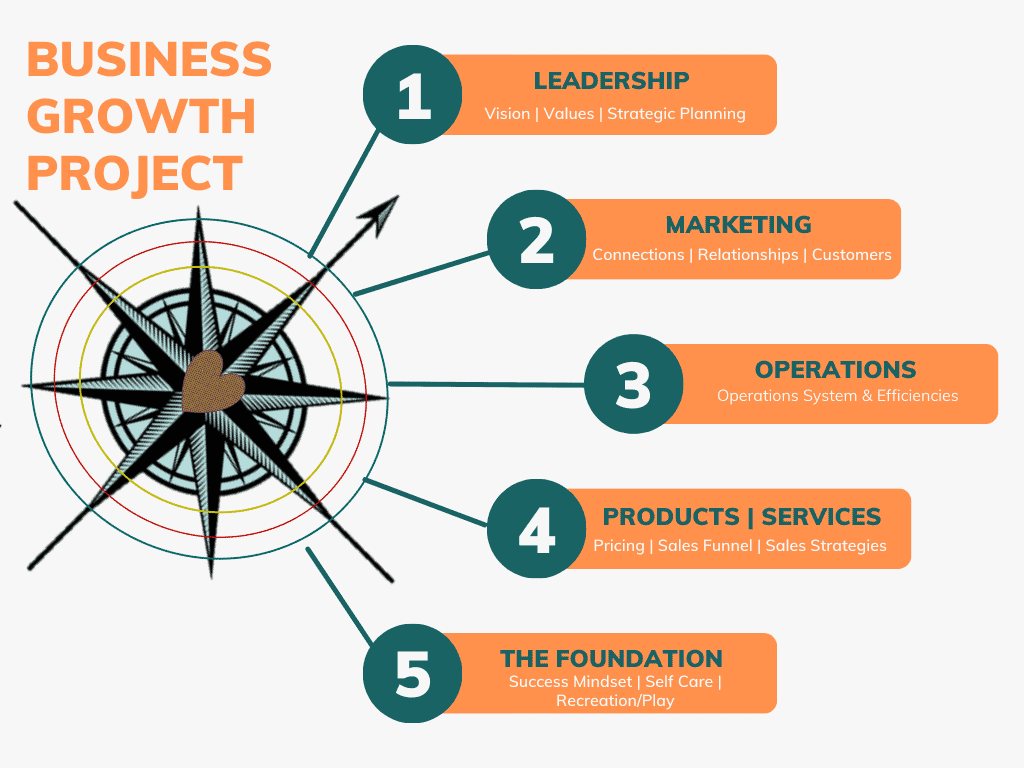
- Vision and Values - A clear vision is the foundation of any thriving business. Define your core values and purpose to create a business that aligns with your goals and mission.
- Strategic Planning - Set clear objectives and develop a roadmap to achieve them with intention and precision.
- Marketing and Relationship Building:
- Connections - Expand your network and attract your ideal audience.
- Relationships - Engage and nurture your community for long-term loyalty.
- Conversions - Implement strategies to turn prospects into paying customers.
- Operational Efficiency - Streamline systems and processes for efficiency and scalability.
- Innovation and Adaptation:
- WOW Offers - Create irresistible products and services that captivate your audience.
- Recurring Income Models - Establish subscription models for steady revenue and customer retention.
The Role of Consistency and Long-Term Commitment

Taking strategic, intentional steps toward business growth requires more than motivation; it demands discipline and the ability to stay committed to the process.


- Set Realistic Goals: Focus on incremental progress rather than overnight success.
- Develop Systems: Structure and organization create efficiency and allow for scalable growth.
- Monitor and Adjust: Regularly assess your strategies and adjust as needed to stay on track.
- Stay Educated and Connected: Engage in continuous learning and seek support from mentors, peers, or accountability groups.
The Bottom Line

Anyone can start a business. The real challenge? Building one that lasts.


Success doesn’t come from chasing trends or sprinting through short bursts of motivation. It comes from showing up with intention, every single day. From sticking with your plan, even when the path feels steep or uncertain.


If you want to build a business that not only survives but thrives—one that reflects your values, delivers real impact, and sustains you for the long haul—then choose consistency. Choose courage. Choose persistent action.


Because in the end, progress belongs to those who persist.


Get Ongoing Support Inside the Business Growth Hub


Your virtual home for learning, growing, and thriving—together.


The Business Growth Hub is our membership platform packed with 25+ on-demand business growth courses, live trainings, and coaching support. Whether you're working solo or want high-touch guidance, there's a path for you here.


New! Choose the level that fits your journey:


Inner Circle – High-touch coaching for accelerated growth
Explorer – Self-guided learning for motivated doers
Navigator – Strategy + structure with community support


Limited Seats Available


Become a Member Today

https://bit.ly/3SYE0GQ

Wednesday, June 18, 2025

The Hidden Dangers of Sales and Discounts in Business

Estimated reading time: 6 minutes

Are You Helping or Hurting Your Business?


discounts in business

Everyone loves a good sale. As consumers, we’re drawn to discounts that feel like we’re getting the most bang for our buck. But as a business owner, is offering discounts or running frequent sales really a smart strategy for growing your brand?


The answer isn’t as straightforward as it seems. While discounts can provide benefits, they also come with potential downsides that can impact your bottom line and your brand's long-term success.


Let’s look at both sides of the discount debate, exploring when it makes sense to offer sales, when it doesn’t, and the strategies to use so that your discounts support your business instead of hurting it.


 The Upsides of Offering Discounts


1. Attracting New Customers and Creating Momentum

Offering a discount or a promotional sale can be a powerful tool for bringing new customers to your business. A limited-time offer can create a sense of urgency, motivating people who might otherwise delay their purchase. Discounts can also help overcome the initial hesitation that people often feel when trying a new product or service.


A well-timed sale can energize your brand, generating excitement among current customers and creating buzz that can lead to word-of-mouth referrals. For a small business, this visibility can be invaluable, helping you reach new audiences who may later become loyal, full-price customers.


2. Encouraging Additional Purchases

In many cases, discounts don’t just bring people in—they also prompt additional spending. Customers who see that they’re “saving” may feel inclined to buy more than they would otherwise, especially if the discount requires a minimum purchase threshold. This can be a great way to increase the overall cart value, especially during holiday seasons or other high-shopping periods.


3. Clearing Out Inventory

Discounts can be especially useful when you have excess inventory or seasonal products that need to move. Offering a sale on older or soon-to-be-discontinued items helps free up storage space, and it can give your new products the attention they deserve. For businesses that rely on inventory turnover, discounts can be a strategic way to keep things fresh without having to deal with costly storage fees or unsold products.


 The Downsides of Frequent Discounts


1. Eroding Profit Margins

The most obvious downside of discounts is that they cut into your profit margins. Unlike consumers, who enjoy the thrill of saving money, business owners still have to account for their expenses. The discount you offer on a product is directly taken out of your profit. For every dollar discounted, you’re losing a portion of your profit, which can add up quickly, especially if you offer frequent or deep discounts.


It’s essential to remember that your fixed costs—materials, rent, employee salaries—don’t change just because you’re offering a sale. Each time you offer a discount, it impacts your bottom line, potentially making it harder to sustain your business in the long run if your profit margins are already slim.


2. Conditioning Customers to Wait for Sales

One of the most dangerous long-term effects of offering frequent discounts is that it can “train” your customers to wait for the next sale. When discounts become predictable, your customers start to expect them, holding off on making purchases at full price. Bed, Bath & Beyond is a classic example. Over time, customers came to rely on their ever-present coupons, and it became almost unthinkable to shop there without one. The brand became known more for its discounts than for its value or product selection.


If customers associate your brand with regular sales, they may only buy from you when there’s a discount. This habit undermines your pricing structure and can make it difficult to sell products or services at their intended price point.


3. Devaluing Your Brand’s Perceived Quality

Frequent discounting can inadvertently lower the perceived value of your products or services. If your items are always on sale, customers may start to wonder if the full price was ever a fair value. When people see frequent discounts, they may begin to associate your brand with cheapness rather than quality. In industries where trust and brand reputation matter, this can be a slippery slope. Your products or services may appear less credible or reliable if people believe that the quality matches the discounted price, not the full price.


Finding the Right Balance: Tips for a Smart Discounting Strategy


Since there are both positives and negatives, a thoughtful approach to discounts and sales is essential. Here’s how to make sure your discount strategy works for you, not against you:


1. Make Discounts Purposeful and Timely

Rather than running frequent or arbitrary sales, tie discounts to special occasions, like holidays, product launches, or customer loyalty programs. If you offer discounts sparingly, they’ll feel more valuable when they do happen, and customers are less likely to rely on them as the norm.


2. Consider Alternatives to Price Discounts

Instead of directly lowering prices, think about adding value in other ways. You might bundle products together, offer a free gift with a purchase, or provide access to an exclusive resource. These alternatives can attract attention without eroding the perceived value of your products.


3. Use Discounts to Reward Loyalty, Not Entice Bargain Hunters

To avoid conditioning all customers to wait for discounts, use sales and special offers to reward your most loyal customers. Offer discounts to your email subscribers, social media followers, or previous customers as a thank you. This approach makes them feel valued while reducing the risk that new customers will expect discounts every time they shop with you.


4. Track the Impact on Your Profits

Before implementing any discount, run the numbers. Determine the break-even point, calculate your profit margins, and track sales outcomes to see if your strategy is working. A sale that generates a lot of purchases but doesn’t increase your overall profit isn’t a successful discount.


5. Communicate the Value of Your Product or Service

In all of your marketing efforts, focus on communicating the value of your products and services. Emphasize their benefits, quality, and the unique aspects of what you offer, so your customers know they’re buying something worthwhile. When customers see the full value, they’re more likely to pay full price and see discounts as a rare bonus rather than an expectation.


Final Thoughts: Use Discounts Wisely to Benefit Your Business Long-Term


Discounts can be an effective tool in your marketing strategy, but they should be used strategically and sparingly. By offering purposeful sales and avoiding constant discounts, you can attract new customers without devaluing your brand or training customers to only shop with a coupon. A strong brand that people trust and value will have far more long-term success than one that’s known primarily for its sales.


Remember, building a successful business isn’t just about making sales in the short term—it’s about creating lasting customer relationships and establishing a brand that people want to invest in at full price.

https://bit.ly/3Ax8JVJ

Sunday, June 15, 2025

7 Effective Strategies for Finding Winning Membership Site Ideas


Unlock Your Creativity and Launch a Profitable Membership Site


membership site ideas

Creating a membership site can be a lucrative way to provide value to your audience while generating consistent income. But before you can launch, you need a compelling idea that resonates with your target market. In this post, we'll explore seven tried-and-true strategies to help you uncover that perfect membership site idea. Let's dive in!


1. Get Personal: Brainstorm Your Own Life

Begin your journey by turning the lens inward. Reflect on your own life experiences, hobbies, and interests. Creating a membership site will be much easier and more enjoyable if it revolves around something you are passionate about.


The Rules of Brainstorming:


- Write everything down that comes to mind.
- Don't judge the ideas—just list them.
- Have fun with it!

Utilize tools like post-it notes to jot down one idea per note and place them on a wall. This makes it easier to sort and organize your thoughts later. Consider expanding your brainstorming to include your family's hobbies and interests. You may discover a niche that's not only profitable but personally meaningful.


2. Observe Product Trends

Pay close attention to the product launches happening in your niche. For instance, in the internet marketing arena, you might notice a surge in products related to video marketing, AI, or social media. These trends can provide invaluable insights.


Useful Platforms for Product Trends:


- Amazon
- Facebook
- Niche-specific newsletters and blogs

Following industry leaders and subscribing to their newsletters can offer a wealth of information on what’s currently selling and garnering interest. This could give you a head start on your own membership site.


3. Peruse Industry-Specific Platforms

To peruse means to examine something minutely, and platforms like JVZoo, Amazon, and ClickBank can be gold mines for this kind of research.


Actions to Take:


- Visit these platforms to see what’s hot in your niche.
- Note down emerging trends and popular products.
- Add these ideas to your brainstorming list.

This will also help you identify affiliate products that could complement your membership site, providing additional revenue streams.


4. Monitor Popularity Indicators

Amazon’s bestseller lists are categorized, making it easier for you to focus on topics relevant to your interests. Use this to pinpoint popular topics within your niche.


Steps for Researching Popularity:


- Check Amazon’s bestseller lists.
- Focus on categories related to your niche.
- Incorporate popular topics into your membership site planning.

This indicator is invaluable because it relies on actual sales data, giving you a clearer picture of what your potential audience is already interested in.


5. Check the Pulse in Forums and Groups

Communities and forums can reveal what your target market is talking about, questioning, or purchasing.


How to Find Forums and Groups:


- Do a basic search with your keyword and the word “forum.”
- Explore platforms like Slack, Discord, Reddit, and Facebook.

Look into FAQ sections and trending topics within these groups. This can provide direct insight into your audience’s needs and wants, helping you tailor your membership site accordingly.


6. Dive into Periodicals

Periodicals might seem old-school, but they are repositories of specialized knowledge and trends. Websites like writemagazines.com offer lists of various periodicals.


Why Periodicals Matter:


- They exist only because there's an audience willing to pay for them.
- Advertisers spend big money to get in front of these audiences.

Identifying a periodical dedicated to your market can suggest a high demand, validating your idea for a membership site.


7. Solve Real Problems

Google Groups and other email discussion lists are a treasure trove of user-generated content. These discussions often revolve around unsolved problems and unmet needs.


Steps to Utilize Discussion Lists:


- Sign up for relevant Google Groups.
- Set up a dedicated email for these discussions.
- Observe the questions and issues being raised.

By focusing on the problems that haven’t been solved by existing services or products, you can carve out a unique niche for your membership site.


Final Thoughts


Embarking on the journey of launching a membership site can seem daunting, but with these seven strategies, you’ll be well-equipped to find a winning idea. Brainstorm personally relevant ideas, observe product trends, peruse popular platforms, and constantly check the pulse of your community. Dive into periodicals for specialized insights and solve real-world problems to create an irresistible membership site.


Take action today and turn your passion into a profitable venture! If you need that extra push, don’t hesitate to schedule a consultation to put you on the fast track to success.


Make it a great day and take big action in your business!

https://bit.ly/43967sX

Saturday, June 14, 2025

Building Your Marketing System

Why do you want and need a marketing system?


marketing system

When you build a marketing system that is YOURS, you KNOW that you have a way to increase your revenue easily and predictably.

A marketing system consistently:


- Brings new and qualified leads (future buyers) into your business

- Has a system for follow up and nurturing that helps YOU connect with your new leads and build the "know, like, trust" relationship

- Uses calls to action wisely to bring people into your customer base.

- Provides customer service that builds loyalty and repeat business.

- Works easily and reliably so that you know what to expect for your growth each week or month.

- Is trackable so that you can improve it when it is not working as well as you want or need it to.

So what does this really mean? Isn't all marketing the same?


There are definitely marketing concepts that work across businesses and industries that you should be implementing in your business. But they can look different for different companies.


For instance, if you are a local boutique you need local traffic into your store. Can the Internet or social media help with that? Definitely. But you also need signage on your storefront, local ads with calls to action.


The biggest mistake I see is that people focus on getting buyers and that doesn't work in a lot of industries. And the mistake is that they don't get the person's information or capture the lead! They have no way to follow up or continuing to build the relationship. The interaction is over.


This happens over and over. A business owner runs an ad -- sending the lead to their BUY NOW button and they don't buy, they bounce! But what if was a different call to action -- an optin where the first step was a really valuable item at a low cost or no cost. Then you have the opportunity to continue marketing and building the "know, like, trust."


So, whether you are a local shop or an online business -- lead capture is key. It has to be a part of your marketing system!!


Lead capture or optins are different from followers or connections. When you build your email list -- it is YOURS. When you have followers or connections or friends on a social media platform, they can definitely become buyers but they can also be taken away by the platform without your control. Moving people over to your email list is key.


What are the pieces of the marketing system?


- Being clear on your target market -- who are you marketing to?

- Lead capture -- having a way of capturing the information when someone connects with you.

- Follow-up - they say the money is in the follow-up and so many miss this opportunity to continue connecting.

- Presenting valuable offers -- when you have done a good job of connecting with your target market, your service should be valuable to them. Building good offers that provide a ton of value are the offers that people will be interested in.

- Loyalty -- everything you are doing up to this step is geared to help you in building loyalty. If you don't have a good follow up system, you will lose customers and they won't come back, because you are not telling them what you have to offer to them.

When you build YOUR system, you have the ability to predict your results. You can turn it on and off. Or up and down based on what you can handle.


When you have a working sales and marketing system -- you can look at HOW to scale your business!! That's exciting! Not everyone is doing that, because not everyone is building a system for their sales and marketing. If there is only one system that you are going to build in your business -- this is the one!!

https://bit.ly/3LrNhDW

Thursday, June 12, 2025

4 Things You Can Do To Your Workspace to Encourage Self Care


Make Your Workspace -- Welcome YOU!!


workspacebr

What does your workspace say about you? Most people try to find ways to personalize the space where they work. While not every job allows for much in the way of personal touches, there are some things you can do to keep your workspace uniquely you. This lends itself to better productivity.


But how does your workspace impact your health? Think about this: there are many things you can do to workspace to encourage self-care. Imagine how this could change your life.


Try these things:


Build Better Boundaries

There are times when you can deal with an interruption, and times when you just need to work. Look for ways to create better boundaries to keep your productivity high, and your frustration low. If you have the ability to shut your door when you need to concentrate, do so. if not, talk to your coworkers about how to signal them when you are in interruption-free mode.


Clean Up Your Act

Sometimes the simplest thing self-care action at work is to create a better workspace for yourself is to clean up the clutter. By being able to find what you need, when you need it, you preserve your sanity and get more done.


Escape to Eat

Your workspace should never be a dining hall. When your lunch break comes around, it's time for you to go. The problem with eating at your desk, is you become tempted to keep working while you eat. The best self-care practice at lunchtime is to step out and eat elsewhere. Even if you work from home, the very act of eating away from your workspace can do wonders for your mental health. Go to another room or even just pick a different chair at the kitchen table as a way of telling your brain you're done working for the time being.


Put Away the Screens

While it's not always practical to put away your laptop or tablet, it's good to do so when you can. Why? After a few hours, staring at any screen, whether it's on your phone or elsewhere, can make your eyes hurt. This constant exposure to electronics can be very wearying and even cause damage to your body over time. Don't believe it? Consider how many people you know, yourself included, who have had problems with carpel tunnel in the past year or two. The solution? Make a point of doing some things by hand. To do lists don't need to be on an app or computer screen to be effective. Also, clustering jobs which aren't tech heavy can give you a nice break during the day.


The key to self-care at work is in making your workspace work for you, not against you. By paying attention to these simple details, you'll feel more productive and enjoy your work day more.
https://www.youtube.com/watch?v=RoMLDQWFlLw
- Learn To Set Boundaries And Start Saying No
- Practicing Self Care: 5 Unique Ways
- The Self Care System
- Self Care Tips
- 6 Tips for Practicing Self Care Even When Times are Tough https://bit.ly/3i8Vq0n

Friday, June 06, 2025

The Essence Of Adopting a Morning Ritual Habit

Creating a Morning Ritual Can Change Your Life!!

morning routine

If you hate waking up early, then you need to read this article (I can definitely fall into this category at times). According to research, creating good habits and sticking to a morning routine plays a huge role in your success. If you're a night owl, unfortunately, this means you will have to find ways to adapt and change your lifestyle.


Creating a morning routine and turning it into a habit may sound difficult at first. But if you keep at it every day for at least a month, you will start seeing noticeable differences in how you approach your entire day. A morning routine will help you feel more stable and you'll be so much more in control of your day.


Its peaceful in the morning


Early mornings don't have as much distraction as other times of the day. Your family and your neighbors will still be in bed (unless they've also adopted this habit), there'll be less noise on the streets, and your personal space will seem so much bigger.


With less distraction, you'll be able to think clearly and you'll have time to exercise, meditate, pray, update your journal, and plan your entire day.


A morning routine will help you feel more in control of your life and you wont feel as disorganized as before simply because you will have time to think your day through and organize your activities.


Simply put, your morning routine will set the tone for your day.


Get work done early


Mornings are best for getting your most difficult tasks done. Getting these tasks out of the way lets you enjoy relatively stress-free afternoons and you'll be much happier because you can get more things done in the day.


Your productivity levels will increase and you can even start working in advance on tasks that don't need to be done until later.


When you get things done earlier and faster in the day, you can reward yourself for a job well done. Just be careful when rewarding yourself though as some rewards may actually be detrimental to your goals.


For instance, if someone asks you to go partying on a weekday, you may want to tell them no. You may be tempted but think first if its going to somehow cause you to sleep in late and thus wake up late the following day. If this is the case, then simply decline.


No amount of partying can replace what you can accomplish by sticking to, and religiously following, your morning routine habit!


- 3 Simple Morning Routines

- 10 Self Worth Affirmations that Work

- 5 Habits that Stop You From Finishing What You Start

- Do YOU Know the Marketing Keys?

- 3 Ways to Get Corporate Sponsors

https://bit.ly/48B6aOd

Wednesday, June 04, 2025

Learn How to Track Your Numbers


Learn How to Track Your Numbers

in your list building campaign learning how to track your Numbers.... Key


Focusing on a successful list building campaign, you need to track your marketing strategy multiple times to glean more information.

You will be unable to boost your conversion until you track your campaigns. To test and track your campaign, you need understand the idea. You need to track your programs and tactics, messages, contact frequency and spending levels to optimize your marketing strategy. Otherwise you are doing HOPE MARKETING and hoping it will work! Numbers tell you if it is or it is not.


Testing and tracking can increase your ROI.

By tracking your campaigns, you will be able to know which campaign bring more traffic toward your website. You can also know from where your visitors are coming to your website such as advertisement, Search engine optimization, social media, blogs etc. By adding tracking code on every page of your website, you can get to know the page visits of visitors that don't converted into your subscribers.


Mainly you need to track for optimizing your campaign, your results.


Number of MQLs (marketing qualified leads): Remember the quotes the money is in the list, you need to add quality leads in your list and eliminate bad leads from it.


Cost per MQL (marketing qualified leads): if you using list building for your marketing campaign. Be sure you are maximizing your leads and minimizing the cost per qualified leads. If you have a list of unqualified leads or not good leads, the size of that list is irrelevant. You can have a HUGE list that costs you money and does not make you a dime. It is worthless.


Cost per Sales or Accepted Opportunity: Examine all of the money spent and the resulting sales or accepted opportunity very carefully over a defined time period. You can have opt-ins for your free offer that later convert to your paid offer. You need this information to determine if the investment in the sales campaign for the free offer converts enough people to the paid offer.


First-Touch ROI (by program): The basic job of a list building marketer is to decide which particular campaign to be used. Your main objective should be to get the highest ROI for your business.


Multi-Touch ROI (by program): Some programs look to be result oriented as compared to the other available. They might not give the desired output in the first impression. Be very careful in deciding which particular campaigns you need to follow. However it does not mean they will not give results in the long run. So, don't stop using them immediately.


You need to find-out which marketing tools works best for your list building campaign. Google AdWords? Webinars? Trade shows? Facebook Ads? LinkedIn Ads? Instagram Ads? Facebook LIVES .....To find out you need to track each campaign.


Campaign Source: You need to recognize and track your lead sources so you can optimize your ROI through your sales funnel. This means you need to understand where the lead is coming from and track the campaigns so that you can make this determination. Yes, everyone might end up on the same list. But YOU need to know if the Facebook Ads campaign has a different conversion rate from the Google Ads....and look at your spend for each campaign in comparison to your results.


Campaign Name: It enables you to distinguish among various campaigns to test different advertisements.


Campaign Medium: It defines the web pages or ads from where the visitors are redirected to your website such as pay-per-click, banner ad or email, search engine etc.


Tracking list history and sales funnel can optimize your business revenue. You can also test report and dashboards by having a clear idea of your funnel and stages according to leads, closed deals and revenue. You can segment your list on the basis of demographics, interest, and product to measure your success.


You can keep rectify your tactics time to time to get better results. You should measure your user responds such as automatic updates, individual manual updates and mass updates. Keep tracking of your opt-in rate, unique open rate, click thorough rate, email deliver success rate, subscribers, unsubscribes and lead conversions to evaluate your list building campaign.

https://bit.ly/3pK7qao

Monday, May 26, 2025

5 Warning Signs That Your Project is Going to Be Derailed

Make Sure Your Project Does Not Get Derailed


When we get derailed or experience a major setback or failure, it always takes us by surprise. Sure, the going was a little rough but we just didn't see it coming. At least, that's what we think.


Getting derailed is serious. It could mean having to start all over again or worse, ditch a project altogether. It’s one of the main causes of not finishing what we start and if this happens often enough, our whole life course can be impacted.


But you can avoid derailment by being alert to the warning signs. That's right, a derailment shouldn’t come as a surprise because there are always red flags that indicate you're heading for big trouble.


Here are 5 key warning signs to be on the lookout for:


You're procrastinating too much

If you're constantly procrastinating rather than acting, it's a sure sign that something's wrong. Your loss of motivation causes you to procrastinate and this could be due to many reasons.


It's your job to quickly find out what they are.


Usually, a quick review of your goals and timeframes to ensure that they're realistic can resolve the issue. Make any modifications you need to, roll up your sleeves and get to work!


Take a look back at your vision. What are you building, why are you building it?? Vision can often get us back on track. If you don't have a vision, (the Vision Board Project is a great resource!!) it may be time to do some visioning. Write it down, make an image for it, revisit it every day. Vision can help re-inspire you and motivate you out of procrastination!


Work has to be redone

When work results are poor and have to be redone (whether you're responsible or others are to blame), this is a big red flag. It means you could be headed for that one big, irrevocable error that could completely derail you.


Usually, the reason is poor communication of task requirements or poor skills. Pinpoint what the problem is and take quick measures to fix it, and closely monitor work outcomes.


You're falling back on deadlines

Whether you're working to your own deadlines or have an assigned one, it doesn’t matter. Consistently falling behind is the biggest motivation-zapper of all. It could simply be due to unrealistic deadlines or goals, and these should be modified. Of course, if the goals are NOT unrealistic then modifying them is not the answer -- accountability and follow through may be needed.


It's important to assess what could be going on. Pinpointing the problem will allow you to quickly get back on track with your deadlines.


You lack motivation

The loss of motivation means mediocre or poor work outcomes, or even finding an excuse to quit altogether. Reflect on why you find the work at hand boring or frustrating.


Sometimes, injecting some enjoyment into a task or project can reignite your motivation. You can do this by mixing up your routine, changing your surroundings and finding new and creative ways to do things. Setting up a reward for work done each day and a bigger reward for the complete project. We do this in Accountability Coaching with daily rewards and bigger rewards.


You're making excuses to quit

When things get difficult, it's easy to find a dozen excuses for quitting – and having to admit defeat and failure is the worst kind of derailment because it destroys your self-confidence and self-discipline.


Learning to see obstacles as exciting challenges that you're totally capable of overcoming will kill your thoughts about quitting and keep you fired up. Shifting your mindset to seeing these as challenges puts you in a better place to finish what you start and overcome the challenges.


Stay Alert


Don't let derailment take you by surprise again and empower yourself to finish what you start with success and outstanding results. Stay alert to these 5 signs that you're getting derailed.


Recognizing the signs of derailment early on and addressing them can effectively keep you moving forward with your project.

https://bit.ly/3YJE4vn

Sunday, May 25, 2025

Entrepreneurial Myths that Will Hurt Your Business

Is Your Business Impacted by E-Myths?


We are going to embark upon a journey through the world of e-myths and debunk them to help you avoid falling into the e-myth trap.


First, let’s take a minute to talk about what an e-myth is. An entrepreneurial myth, or e-myth, is an assumption that anyone can succeed at business with:


·       Desire


·       Some capital


·       Projected a targeted profit


This sounds great, but it just not realistic. Think of starting a business as a marathon. Sure, everyone starts out of the gate at record pace, but after a few miles people start slowing and some drop out entirely. Building a successful business takes stamina and agility.


The reality is that there are many different facets to a successful business and none of them can be ignored if you plan to find success.


Let’s take a minute to talk about entrepreneurial seizure. This defines the roller coaster of emotions that comes with starting, nurturing and the potential failure of a business.


The emotions that occur, in order, are:


·       Exhilaration


·       Exhaustion


·       Despair


·       Sense of self-loss


This is usually cause by the e-myths and assumptions we talked about. You can get your hopes so high on instant success that even the smallest lag and you are sent into an emotional tailspin. This is also brought on by the stark realization that you can’t do it all and will need help in the areas where you don’t have the knowledge. Now, faced with limited choices you may feel like you need to back out and hide, but don’t do this.


Pick up a copy of the Visionary Womenpreneur's Field Guide to learn how to create your strategy effectively.

https://bit.ly/49Tohi5

Saturday, May 24, 2025

Customer Reviews On Your Site Increase Conversions

Customer Reviews Are GOOD For YOU!!


customer reviews
Do you include product or service reviews right on your website?

Are you coordinating the customer reviews right on your site or are you importing them from another site?


Conversions can Increase


Believe it or not -- reviews -- good or bad can increase your conversions.  (That means more sales!) Right off the bat you would think that a bad review doesn't help you.  But it is the fact that you have reviews at all that is helping you.  The advantage of having them right on your site is that the visitor is in your sales funnel.  If they leave your site to check reviews then there is a good chance that they aren't coming back.  Keeping them on your site increases your chance of converting them into a buyer or customer.


If you are using Wordpress to manage your site there are several nice plugins that will add customer reviews to your site. I use FluentForms for reviews.


I generally play with plugins to see if I like the way it works.  I read the reviews on the plugin and ratings and also check when it was last updated.  If it has been longer than a couple of months then I generally move onto another plugin.  It is important to use up to date plugins as Wordpress is always updating and old plugins or themes can mess up your site.


Bottom line on customer reviews is that they are good for you.


You can also collect them on your Facebook page or LinkedIn page and import those to your site.


Ask for Feedback


Ask your customers for reviews.  The ethics of reviews is important. Don't pay for reviews or incentivize reviews. Keep it real.


Follow Up on Bad or Negative Customer Reviews


And of course if you do have a bad customer review -- try to do some follow up with the person. Not so much to get them to take down their bad review of you, but to try to remedy the dissatisfaction and provide excellence in customer service.  Many times a bad review is based on a bad interaction and can easily be remedied with a good one.  Be the kind compassionate, customer care rep that turns the situation around.


Customer Reviews helps you in building your business operations as well as helping your onsite conversion.  Take each customer review as a gift and be thankful for the positive or negative feedback. Each customer review can help you grow and develop your company.


If you have found value here at Compass Rose Consulting -- leave a review!! When you do, we share your story, your website online and that can benefit YOU as well as us!!

https://bit.ly/3D7X8xB

Innovation, Persistence, and Consistency: Key Ingredients for Business Development

business developmentbr

In today’s fast-paced and highly competitive business landscape, staying relevant requires more than just showing up every day. It requires a commitment to continuous improvement, fresh ideas, and the willingness to think outside the box for business development. If you're a business owner, you know how important it is to consistently innovate, persist through challenges, and maintain consistency to create lasting success and foster business development.


Let’s dive into why these three elements—innovation, persistence, and consistency—are vital to growing your business and making a meaningful impact. Business development relies heavily on these factors.


1. Innovation: The Fuel for Growth


Innovation is more than a buzzword; it’s a way of life for successful businesses. By constantly seeking new ways to improve your products or services, you show customers that you are committed to providing value and staying ahead of the curve. Innovation isn’t always about creating something entirely new; sometimes, it’s about reimagining what you already offer. This approach can significantly contribute to business development.


Ask yourself:  
- What small changes can I make to improve my product or service?
- How can I add value in a way that’s more appealing to my target audience?
- Are there creative solutions to existing challenges that could benefit my customers?


Keep in mind that innovation should serve your vision, mission, and values. Every new idea or improvement should align with your core purpose and contribute to profitability. When innovation supports both your business and your goals, it has the potential to be a game-changer for business development.


2. Persistence: The Power of Not Giving Up


Success rarely comes without setbacks. Behind every thriving business is an owner who persevered through challenges, learned from mistakes, and kept pushing forward. Persistence is crucial to navigating through tough times and emerging stronger, ultimately contributing to business development.


While innovation might spark growth, persistence keeps you on track. When challenges arise, remember:
- Setbacks are often opportunities for learning and growth.
- Revisit your “why” to keep yourself motivated during challenging times.
- Celebrate small wins to maintain momentum and stay focused on your long-term vision.


3. Consistency: Building Trust and Credibility


Customers crave reliability, and consistency is the key to building a trustworthy brand. When you show up consistently, you build credibility with your audience, making them more likely to choose your business over others. Whether it's delivering exceptional service, maintaining quality standards, or sticking to your values, consistency establishes a foundation of trust crucial for business development.


Consistency doesn’t mean you can’t experiment; rather, it means that your core values, mission, and dedication to quality remain steadfast, even as you explore new ideas and methods.


Your Next Big Idea Could Be the Game-Changer


Take a moment today to reflect on your business. What’s one area where you could innovate, change, or improve that might increase your impact? Remember, it doesn’t have to be a massive overhaul. Sometimes, the smallest adjustments can make the biggest difference in business development and growth. 


Incorporate innovation, persistence, and consistency into your business practices, and you’ll set yourself up not only for growth but also for making a meaningful impact in the world.

https://bit.ly/3CxmDrp

Tuesday, May 20, 2025

Repurposing Formats to Increase Your Audience

repurposing formats

Table of contents

- Repurposing Formats can be the answer to: The Top Reason People Ignore Your Content!!
- Repurposing Formats can Accommodate Various Learning Styles
- Analyze Your Content When Considering Repurposing Formats
- Repurpose Your Content!!
- Monitor Results

Repurposing Formats can be the answer to: The Top Reason People Ignore Your Content!!


Do you find yourself spending hours researching and creating content and when it finally goes live nothing?

You have created engaging material about topics your audience cares about, but the likes, shares, or comments are underwhelming.


The problem is not always the quality of the material itself, but it could be the format.


Do you understand WHERE your audience consumes their info?


Repurposing Formats can Accommodate Various Learning Styles


People have different learning styles and preferred ways of consuming content. So, you need to look at how to accommodate that!!

Written: Written content including articles, eBooks, and blog posts appeals to people who prefer reading and have strong comprehension skills. Written content gives people the freedom to take in information at their own pace and easily refer back to sections they want to review.


Visual: Visual content like charts, diagrams, infographics, and videos appeal to learners who process information visually. For them, pictures and graphics make complex information more digestible, accessible, and memorable.


Audio: Audio content includes audiobooks, lectures, and podcasts, and it suits learners who take in information by listening. Its also useful for people who like to multi-task, tuning in while exercising or commuting.


Analyze Your Content When Considering Repurposing Formats


Quickly review the last 10-15 pieces of content you have created. What percentage of your content is written, visual, video, or audio?

Lets say the majority of your marketing content is written, for example, blog posts, social posts, reports, eBooks etc. Various studies have shown that up to 65% of the general population are visual learners. If you do not accommodate this segment of your audience, you could end up losing them.


The solution?

Repurpose Your Content!!


Repurposing allows you to connect with more people, using content they enjoy consuming, across various platforms.


Repurposing is not simply about recycling content. Its about strategically transforming your content to cater to your audience and the different ways they consume content and learn. For example, you could transform a long-form blog post into an infographic, explainer video, or podcast episode, reaching your visual or auditory learners.


You can also repurpose to incorporate all mediums and learning styles, making sure each type is represented: written (a social post), visual (an infographic), and auditory (a podcast episode). Or, when you repurpose, combine 2 or more mediums in one piece, for example, add an infographic and audio snippet to a blog post.


Monitor Results


After you repurpose, monitor your engagement metrics: Which formats are getting more likes, shares, and comments? Are certain types of content driving more traffic to your website? Asking these questions will allow you to know your audience better and adjust your repurposing strategy as needed.


Learn more with my Content Repurposing Guide:


Want to connect with a broader audience through repurposing? Check out my course, Repurposing which teaches you the A to Z.

This guide will give you Quick Tips for creating a content marketing strategy.

Using your content only once is cumbersome. It means that you are constantly creating new content. But when you repurpose your content, then you are able to maximize its reach and its power.


Check it Out

Content Repurposing is central to an effective Content Marketing Strategy.


Can content be a marketing strategy? YES!! Definitely! Content educates your prospect, your leads about YOU, your organization and what you have to offer. It is a pre-seller to your services.


Content Repurposing Workshop


https://bit.ly/4di0B9e

Sunday, May 18, 2025

Top 5 Tips to Add Value to Your Repurposed Content

Repurposing Saves You Time and Money.


Don't let it be overwhelming!!

repurpose content

You’ve heard it said numerous times: repurposing content isn’t simply a matter of recycling – you’re not just taking the original content and pasting it into new formats, in different mediums, on different platforms. For example, if you’re repurposing a blog post into a social media post, it’s not enough to cut and paste a paragraph from the blog and call it a day.


You must tailor and tweak the content to suit different media and audience preferences. You are transforming content, not duplicating it. You need to add value.


But how can you make the repurposed content distinctive, unique, and valuable without spending hours recreating it? After all, isn’t repurposing supposed to save you time and resources?


You don’t need to do a complete redesign or rewrite. Here’s how to add value to your repurposed content without reinventing the wheel.


 1. Tailor to the Medium and Audience


Every medium, whether it’s audio, video, visual, or interactive has its own distinct characteristics. Tailor your repurposed content to that medium and its audience. For a video, incorporate a live demonstration to simplify complex ideas or processes. When developing an infographic, break down the essence of the core content into five key visual points. If you’re creating a podcast episode out of existing content, focus on the key points and deliver it in a conversational manner, or, think of questions you can ask your guest that will naturally expand upon the topic.


 2.  Add Fresh Insights


Your original content may have been published a while ago: incorporating a fresh perspective or new insight is an effective way to rejuvenate old material. Add information about the latest industry trends, the launch of a relevant product, or the results of a recent study. By doing this, you’ll add value to the original material, keeping your content current and useful.


 3. Integrate Examples and Case Studies


Examples and case studies enrich your repurposed content, supporting your claims and explaining your concepts. For example, if your original content offers productivity tips, in your repurposed material, add a case study illustrating how the techniques made a difference in a client’s work life. It backs up your material and provides your audience with a tangible, real-world application.


 4. Incorporate Data


When repurposing your content, insert relevant data that supports your content. For example, if your original piece is about social media trends, add the latest statistics or a chart that shows growth over time. Visual representations of data are easier to digest and understand. Adding data is especially powerful when transforming written content into a visual piece, like an infographic or video.


 5. Edit and Improve


The final way you can add value to your repurposed content is simply improving it. When we complete content, there’s always something we wish we had tweaked or refined the minute we click publish. When you repurpose into different formats, this is your opportunity to make those changes. An explanation that wasn’t quite right, examples that could illustrate your point more clearly, or even the style or tone. Take the time to fix the things you weren’t 100% pleased with in the original content.


Want to learn more about how you can improve YOUR content? Head over here:


https://bit.ly/3X2SOHG

Tuesday, May 13, 2025

Are You Dreading Year End Performance Appraisals?

Do you  sit in your office dreading the conversation with employees around performance an their annual performance appraisal?

leadership-performance appraisals

Do you wish the performance appraisal would just be over with?

Have you ever procrastinated the employee performance appraisal so long it was almost the next year?

These are just a few of the comments we hear from managers and business leaders about the annual employee performance appraisal.  Many feel the same about their own, personal performance appraisal and dread it equally.  What makes them so difficult?


It's the direct conversation with another person that makes it hard, AND the fact that the conversation has NOT been ongoing.  When the performance appraisal is used as an effective tool for enhancing employee performance improvement the conversation is happening throughout the year and the employee and the supervisor are both engaged and committed to the plan.


Shifting to a performance improvement system that is positive, focused on producing results and success shifts the entire year end experience.  In addition, the workplace culture shifts to one of results oriented and skill mastery.  Employees are engaged in the top goals for success and they know that they have the support of their managers and team.


What does it take to make this shift?


First, it takes a new paradigm -- one that is focused and positive.


The manager has to make the first shift.


The next step is to use a planning process that engages the employee.  We use the Best Year Yet® system of transformation.  It is a powerful system of moving employees into a results focused paradigm and taking a moment to look at their limiting beliefs as well.  By doing this the manager can help them to overcome limitations and be successful.  The plan sets the top goals for the employee for the year, in collaboration with the manager or leader.  The plan is simple and focused.


The plan is then reviewed with the employee each month.  It is not the manager leading the conversation but rather the employee.  The employee comes to the meeting prepared to discuss their goals and how they did on each goal for the previous month.  Using an online system for tracking goals, employees actually login into their plan and SCORE their goals.  This is a powerful shift in how appraisals are done.  It is empowering to employees and more fully engages them in the plan and its outcomes.  It is not a plan that has been handed to them and is negatively focused, it is a plan that they have developed to create their "best year yet", and as a result the company results are improved.


When managers are engaged with employees then they are more clued into what is interfering with success. They are having regular conversations with staff and know what is happening through out their area of responsibility.  In addition, they know just how their team is performing.


When it comes time to review the plan again at year end the experience is no longer dreaded but is anticipated with enthusiasm.  Relationships between managers and employees are shifted to collaborative rather than controlling and confrontational.


Workplaces that develop a system of performance improvement see greater team work, greater company results and more collaborative behavior on their team.

https://bit.ly/4aPKI9Q

Thursday, May 08, 2025

5 Benefits of Empowering Employees

Estimated reading time: 3 minutes


Table of contents

- 1. Free Up Management Time:

- 2. Company Growth

- 4. Empowering employees is good for morale.

- 5. Increased staff satisfaction

-  

empowering employees, empowered staff

Empowering employees can have multiple positive benefits to the workplace.


1. Free Up Management Time:

Employees can take the lead on projects and tasks and free up the manager or leader to do other things.  The leader often has the responsibility of growing the company. When they tie themselves up in the day to day operations they remove themselves from this important task.


2. Company Growth

Growing the company, getting out and acquiring new projects, new clients and visioning greater success are all part of being the CEO or leader.  Employees can take on the day to day operations of organizations.


4. Empowering employees is good for morale.

When managers have to control every aspect of an employee’s work it is demoralizing to the employee.  When staff make suggestions or put forth ideas and they are never accepted or considered, or have to be the idea of the manger or leader, then employees stop making suggestions.  Staff do not work for pay alone.


5. Increased staff satisfaction

Work conditions play a major role in staff satisfaction and performance.  When staff are in a situation where they have little control, are not acknowledged for their work or ideas then their performance suffers.  The results for the team or the company are negative.  Turn-over increases and the costs to organization are impacted.


Empowering means giving up some control, but does not mean that the organization runs wild. Staff have great ideas.  It is gold.  They see ways to improve operations, get things done faster, easier for less cost.  The misconception of the micro manager is that only they care about the company.  When true leaders share their vision and passion for the company, employees can embrace that vision and passion as well. When that leader then empowers the employees to do great work, results can soar.


As the leader or CEO you can set up communication systems that empower employees and at the same time keep you informed and in the loop.  But you do need to follow through and let employees make decisions and not take back all control when you are informed of staff decisions.


Empowering instead of micro managing will result in better organizational results and free you, the leader up to further grow the organization.


When you develop an environment that coaches staff, then you are meeting with your staff consistently and regularly.  Your staff have specific goals that they are working on and reporting on and you are both tracking what the results are. That environment looks forward towards the company vision and strategic plan so that everyone is working in the same direction for the growth of the organization. This shift not only empowers staff but also empowers you as the leader to be the leader and focus on growth.


- How to Stop Micro-Management and Empower Staff

- Team Building

- Donna Price Books

- What Happens When You Put Off Leadership Development?

- Leadership Growth - A Number 1 Success Strategy https://bit.ly/48wmDlU